Unit III: Restoration and the Eighteenth Century
Marriage A-la-Mode
William Hogarth (1697–1764) · 1745
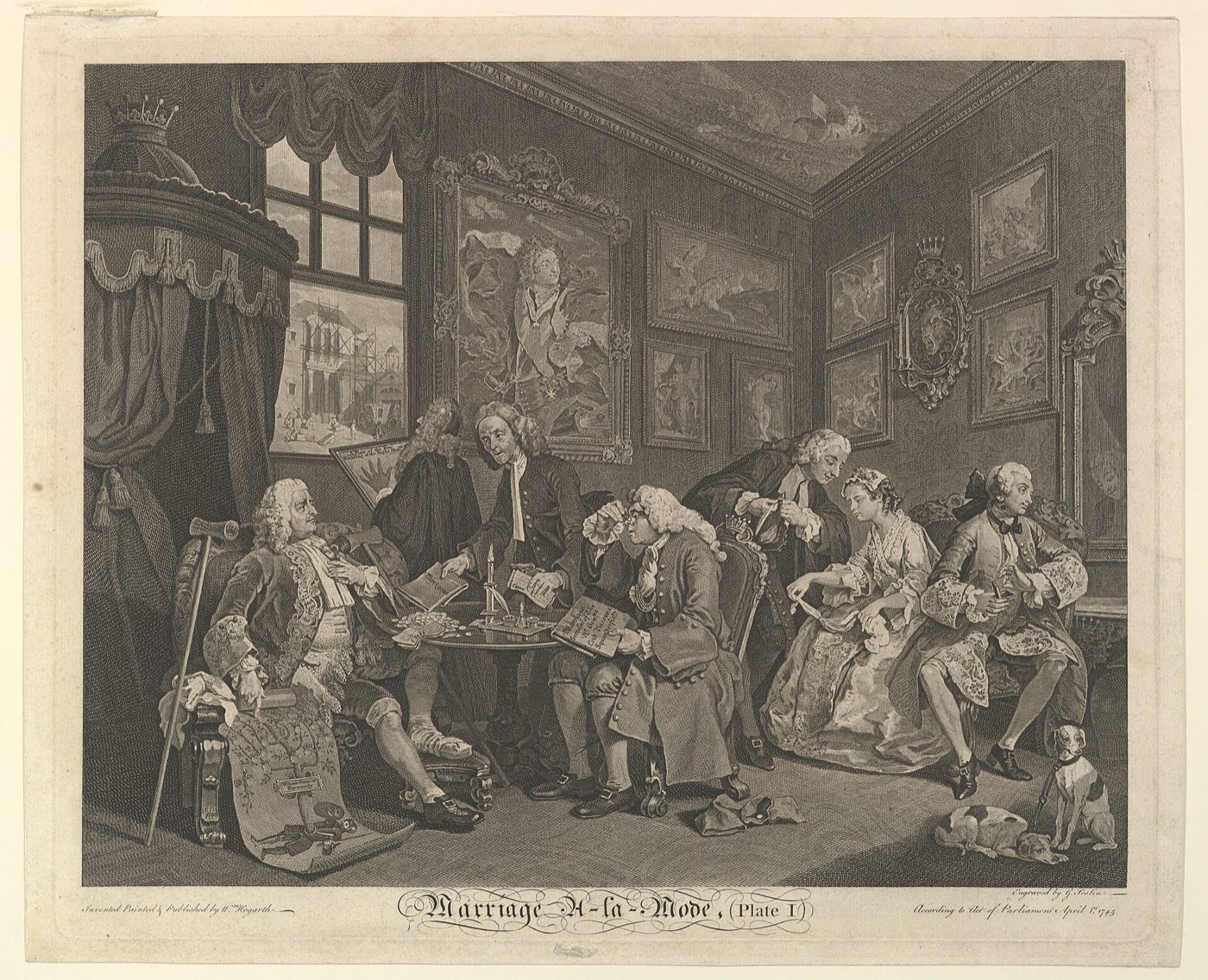
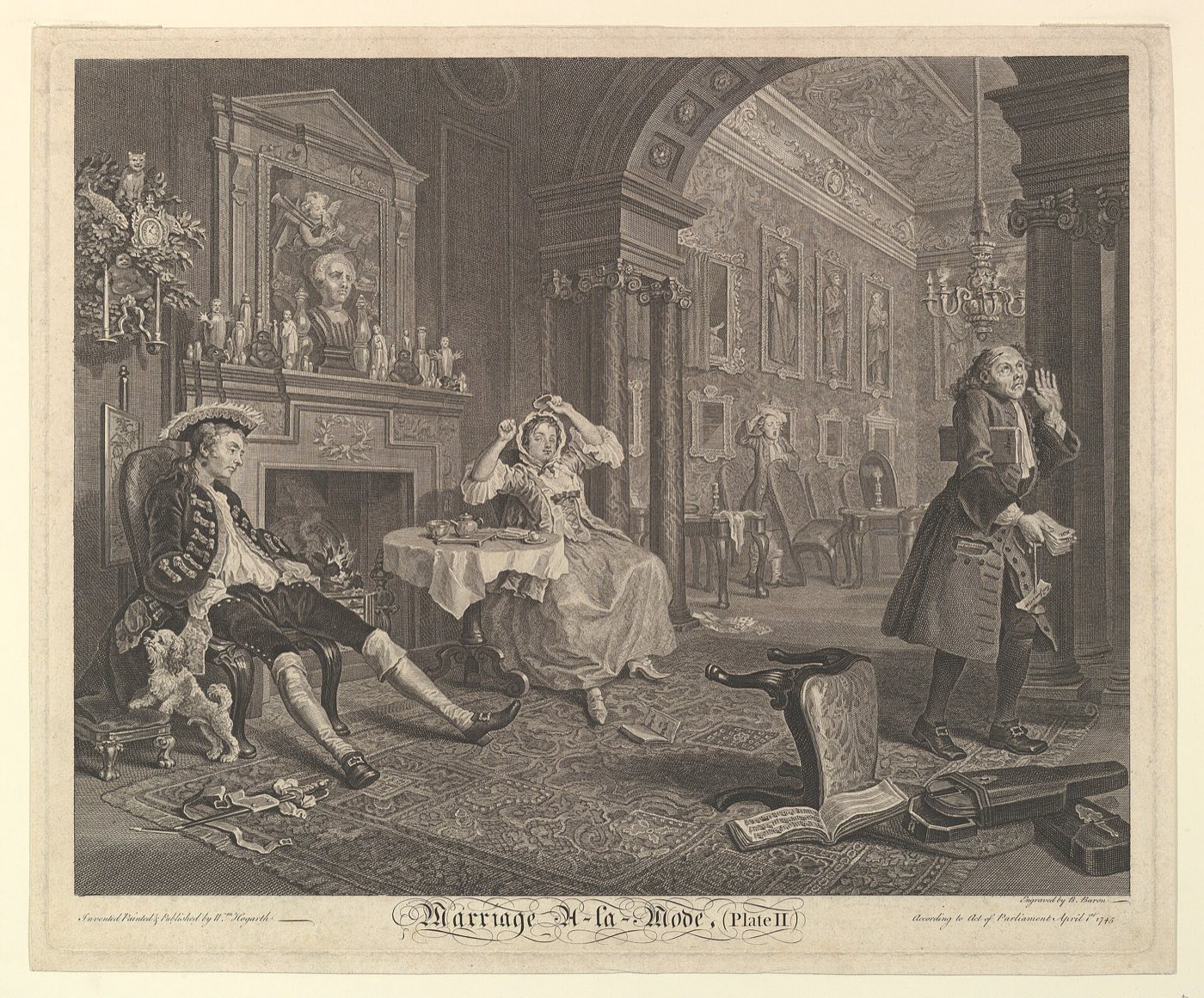
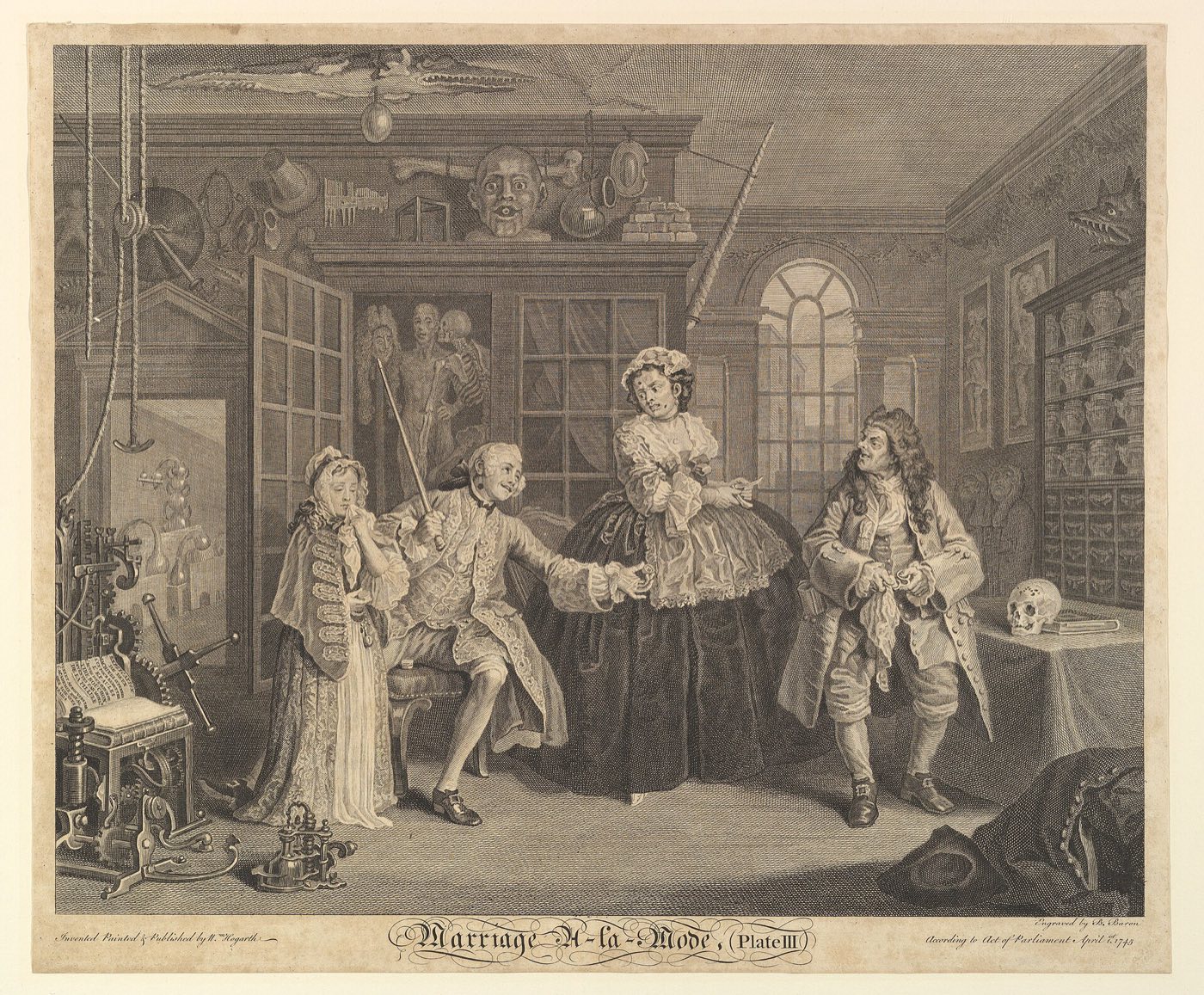
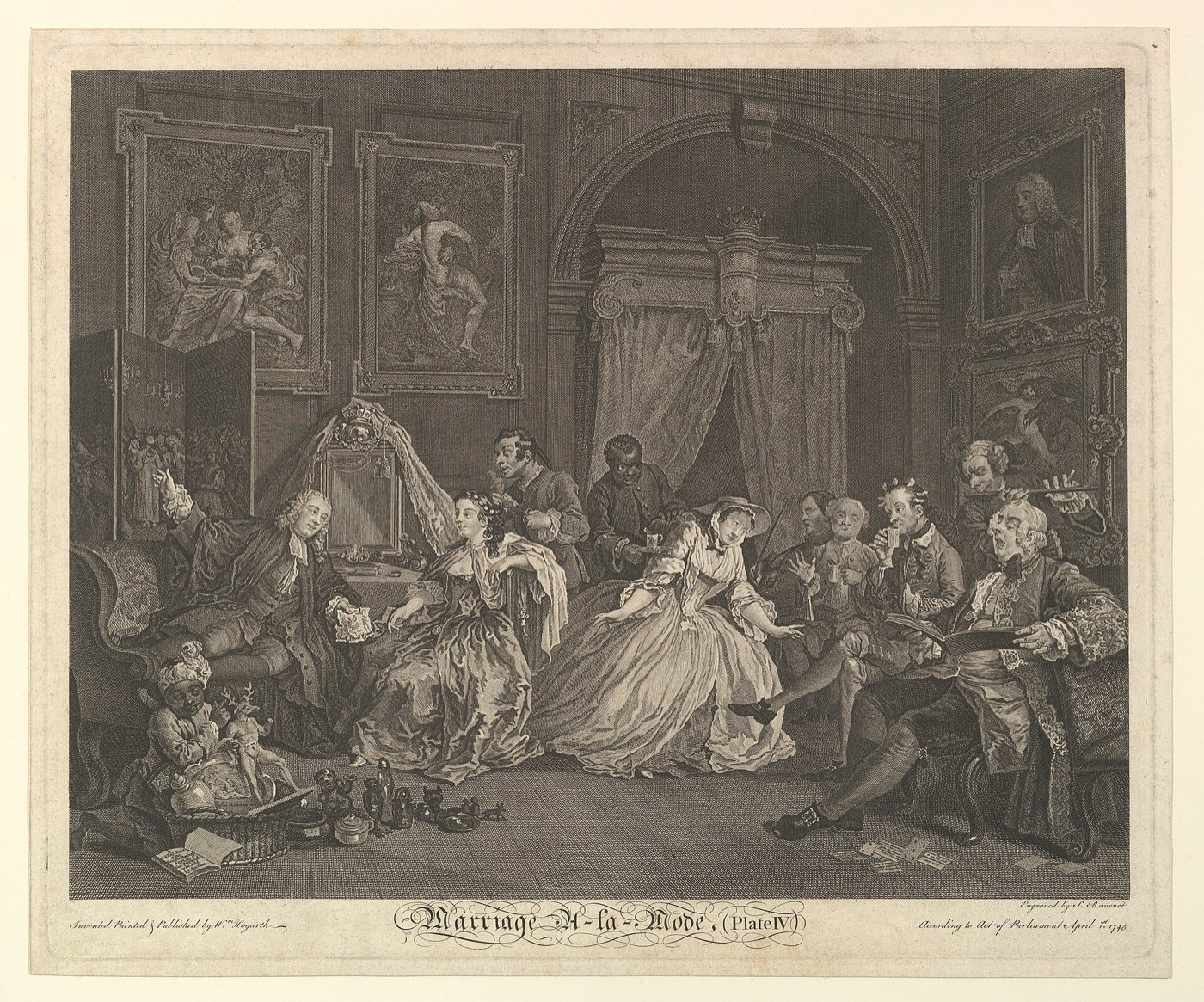
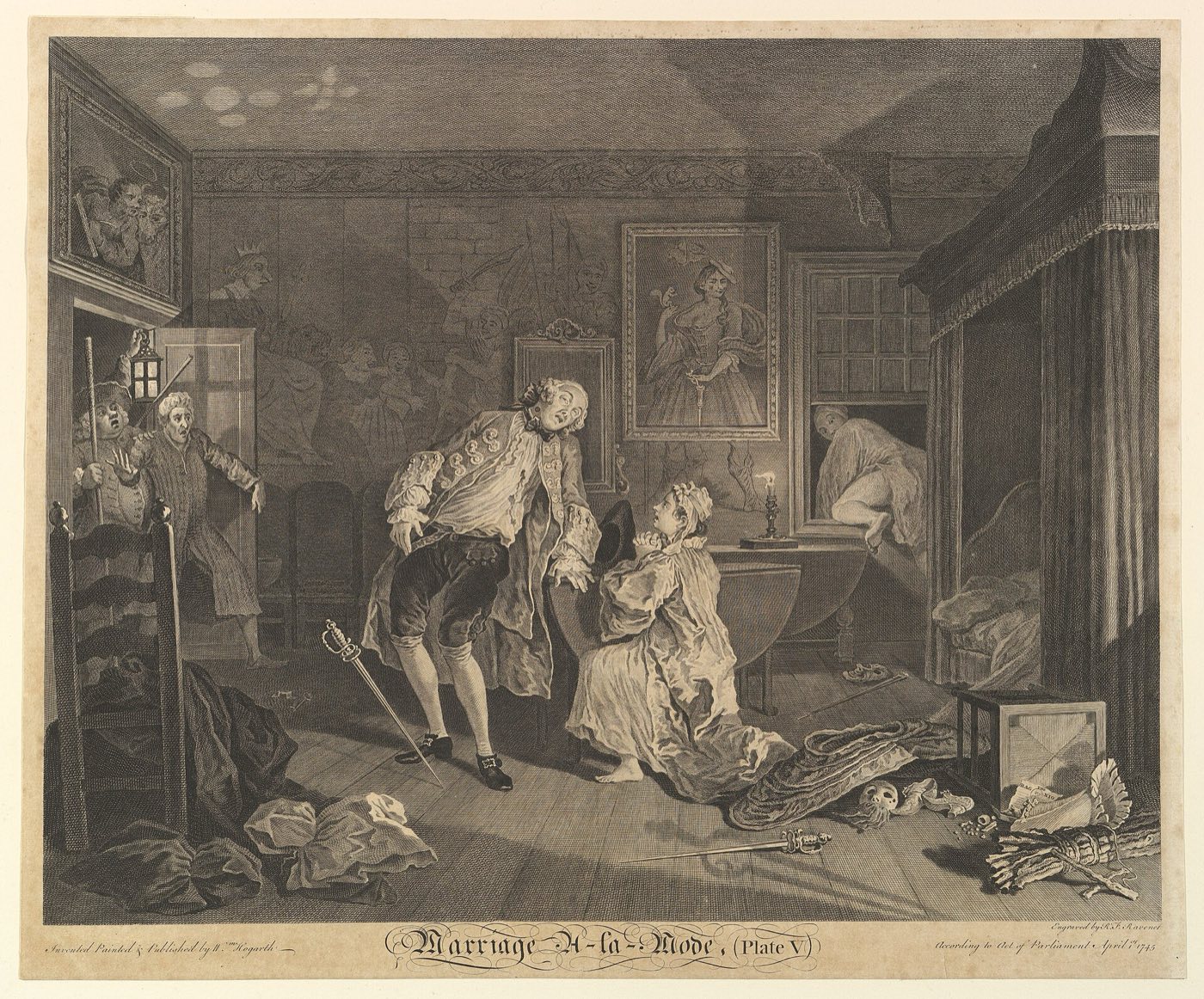
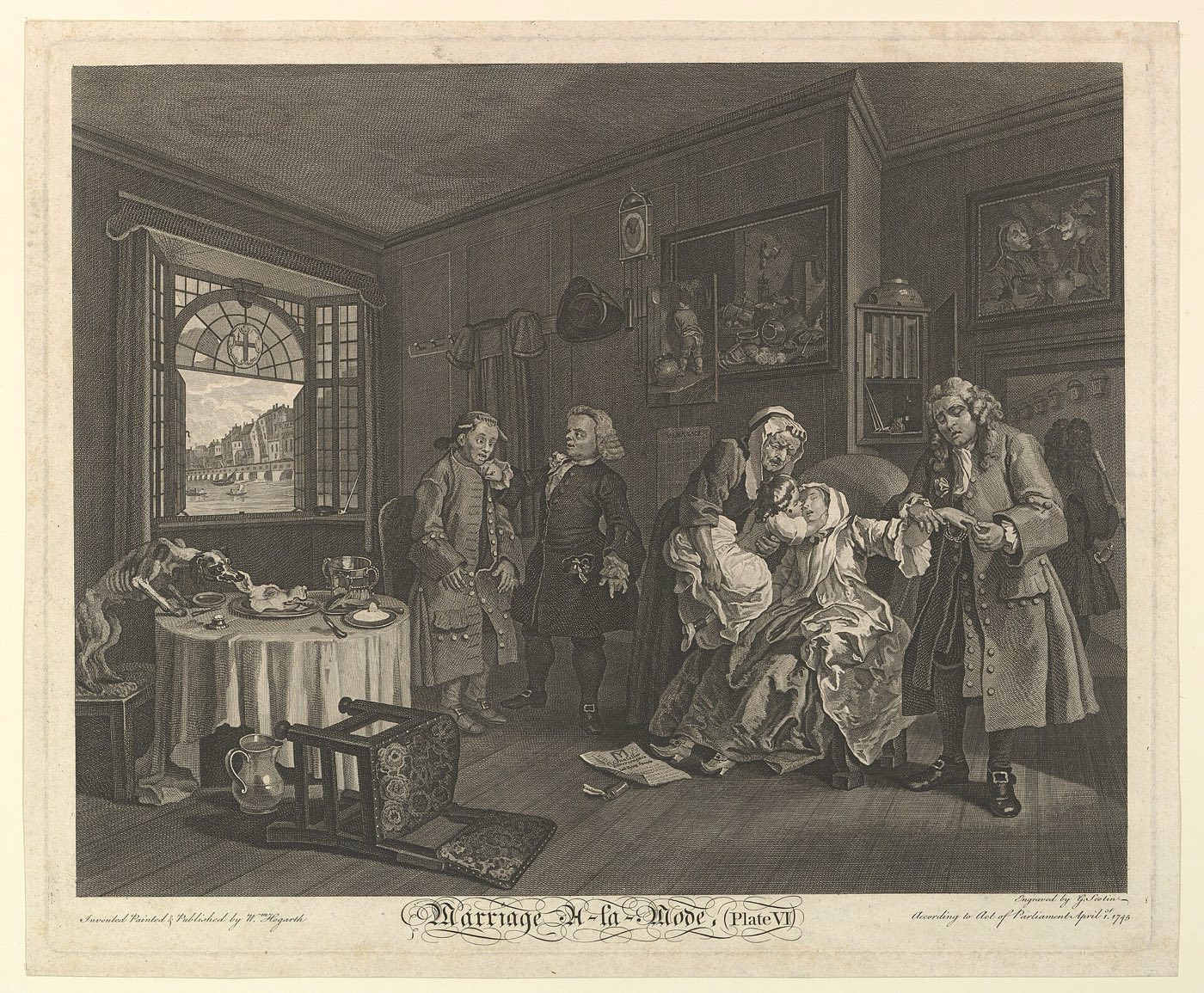
Six paintings (1743–45), engraved and published in 1745, following an arranged marriage between the son of a bankrupt earl and the daughter of a rich merchant, from the signing of the contract to the deaths of both. The engravings reverse the paintings left to right. The images are the Metropolitan Museum of Art’s, released into the public domain; select a picture to open it at full size. Text: William Hogarth, Marriage A-la-Mode , Plate I (1745), engraving; The Metropolitan Museum of Art (CC0) ; William Hogarth, Marriage A-la-Mode , Plate II (1745), engraving; The Metropolitan Museum of Art (CC0) ; William Hogarth, Marriage A-la-Mode , Plate III (1745), engraving; The Metropolitan Museum of Art (CC0) ; William Hogarth, Marriage A-la-Mode , Plate IV (1745), engraving; The Metropolitan Museum of Art (CC0) ; William Hogarth, Marriage A-la-Mode , Plate V (1745), engraving; The Metropolitan Museum of Art (CC0) ; William Hogarth, Marriage A-la-Mode , Plate VI (1745), engraving; The Metropolitan Museum of Art (CC0) .
Hogarth painted this self-portrait in 1745, the year he published the engravings of Marriage A-la-Mode . The books under the portrait are by Shakespeare, Milton and Swift, and the dog is his pug, Trump. William Hogarth, The Painter and his Pug (1745), Tate Britain, London. Wikimedia Commons (public domain) Plate I: The Marriage Settlement . The earl trades his title for the merchant’s money, and the couple to be married have turned their backs on each other. William Hogarth, Marriage A-la-Mode , Plate I (1745), engraving; The Metropolitan Museum of Art (CC0) Plate II: The Tête à Tête . Soon after the wedding, husband and wife each come home from their own pleasures, and the household’s bills go unpaid. William Hogarth, Marriage A-la-Mode , Plate II (1745), engraving; The Metropolitan Museum of Art (CC0) Plate III: The Inspection . The husband visits a quack doctor’s rooms about a disease. William Hogarth, Marriage A-la-Mode , Plate III (1745), engraving; The Metropolitan Museum of Art (CC0) Plate IV: The Toilette . The wife, now a countess, receives visitors as she dresses, among them the lawyer Silvertongue, her lover. William Hogarth, Marriage A-la-Mode , Plate IV (1745), engraving; The Metropolitan Museum of Art (CC0) Plate V: The Bagnio . The earl finds his wife with Silvertongue at a bathhouse and is killed by him in a sword fight. William Hogarth, Marriage A-la-Mode , Plate V (1745), engraving; The Metropolitan Museum of Art (CC0) Plate VI: The Lady’s Death . After Silvertongue is hanged, the countess poisons herself in her father’s house, and her father takes her ring before she dies. William Hogarth, Marriage A-la-Mode , Plate VI (1745), engraving; The Metropolitan Museum of Art (CC0)
Cite this reading (MLA) Hogarth, William. Marriage A-la-Mode . 1745. British Literature I: Readings , oer.drechols.prof/british-lit/hogarth-marriage-a-la-mode/. Accessed day Month year .
Cite a passage by paragraph number, for example (par. 12). Each number in the margin links to its paragraph.
Previous A Modest Proposal Next The Humours of an Election