


Unit III: Restoration and the Eighteenth Century
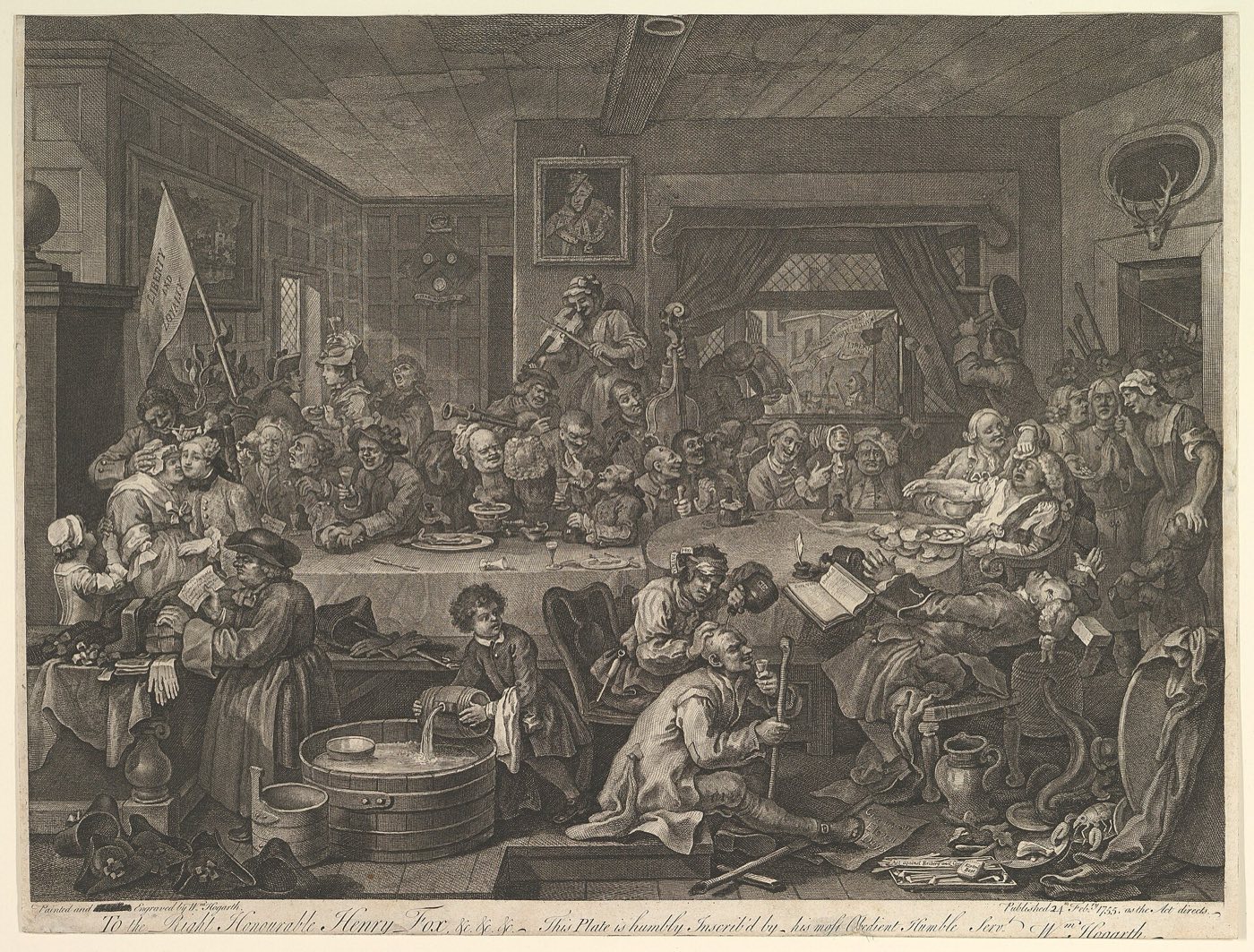
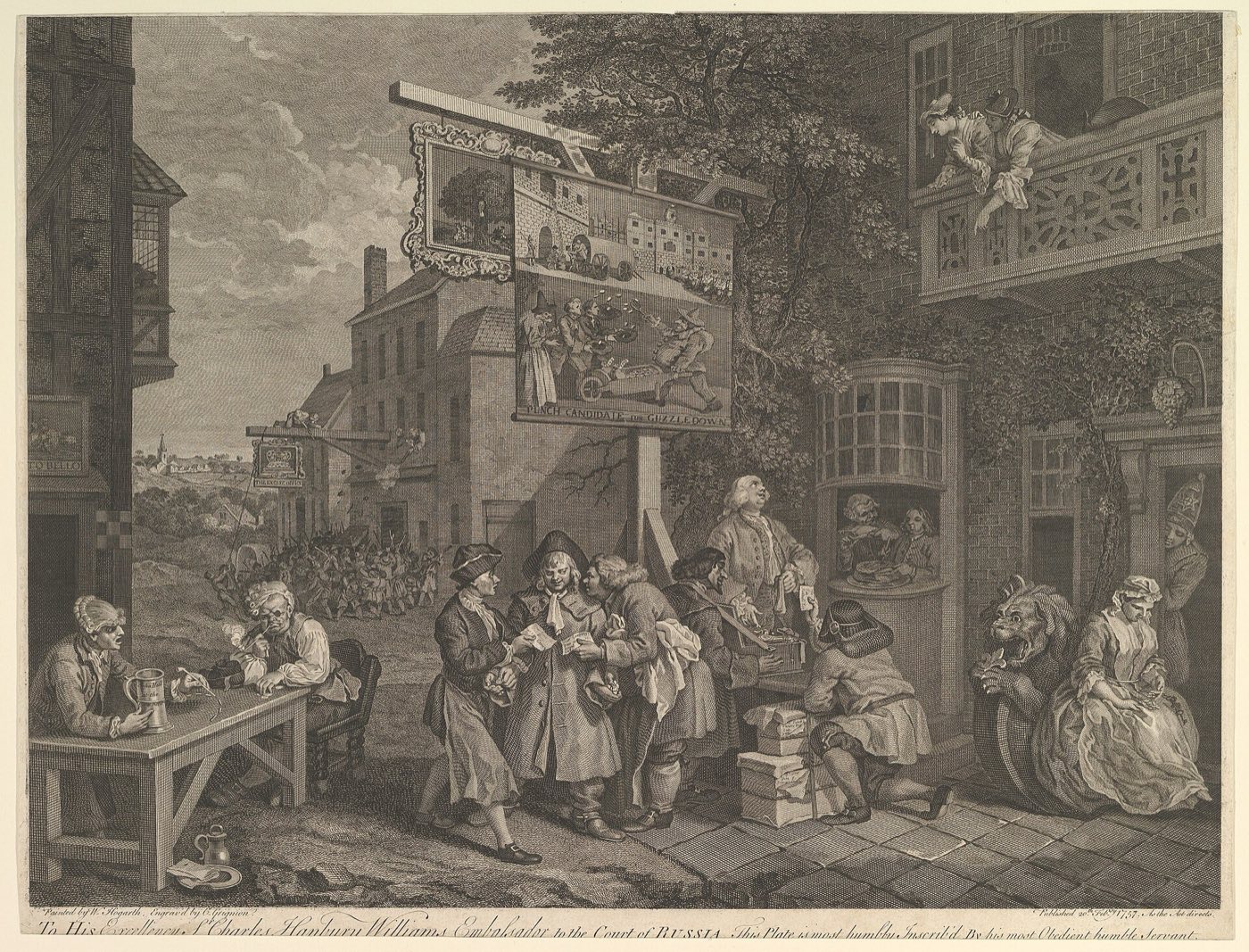
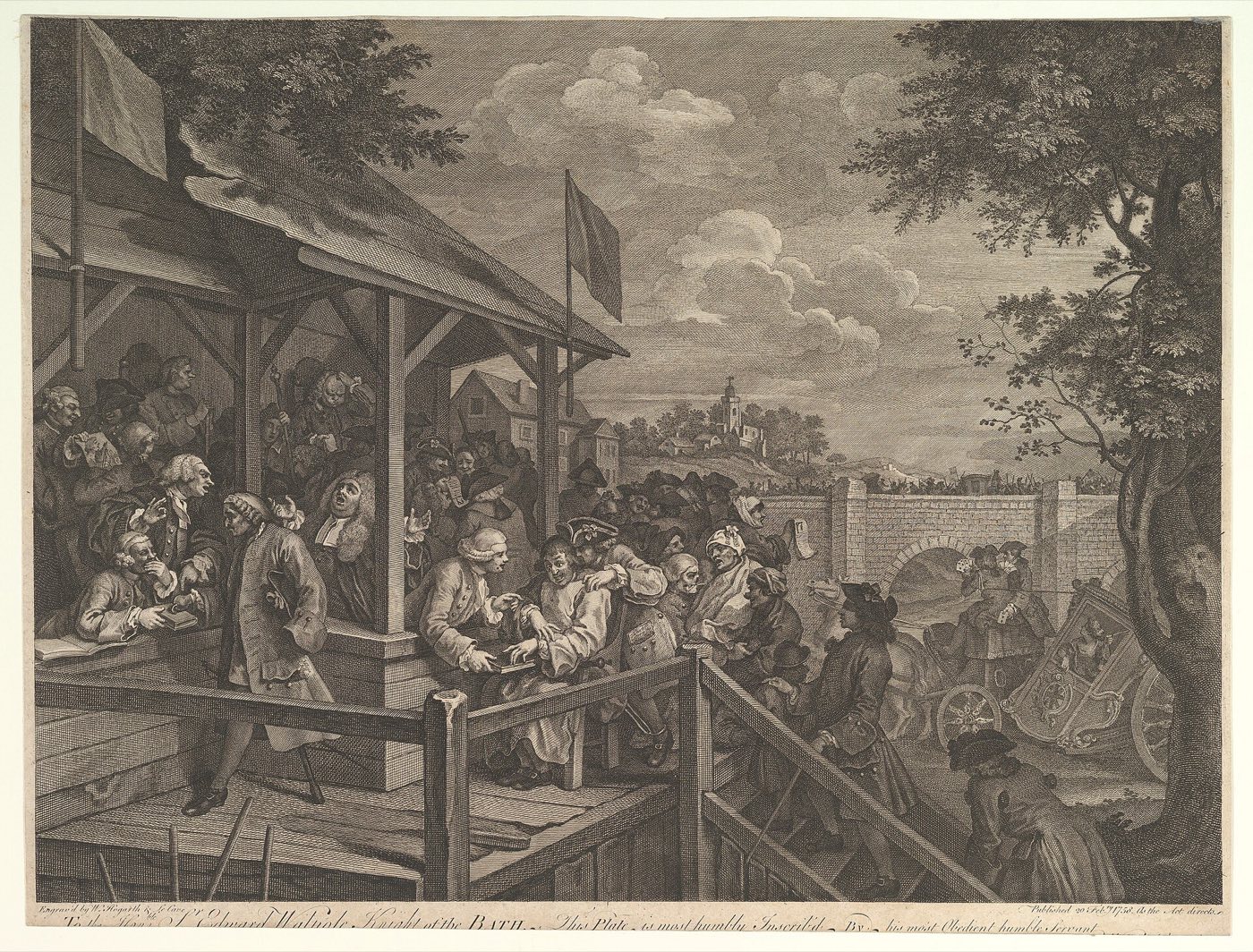
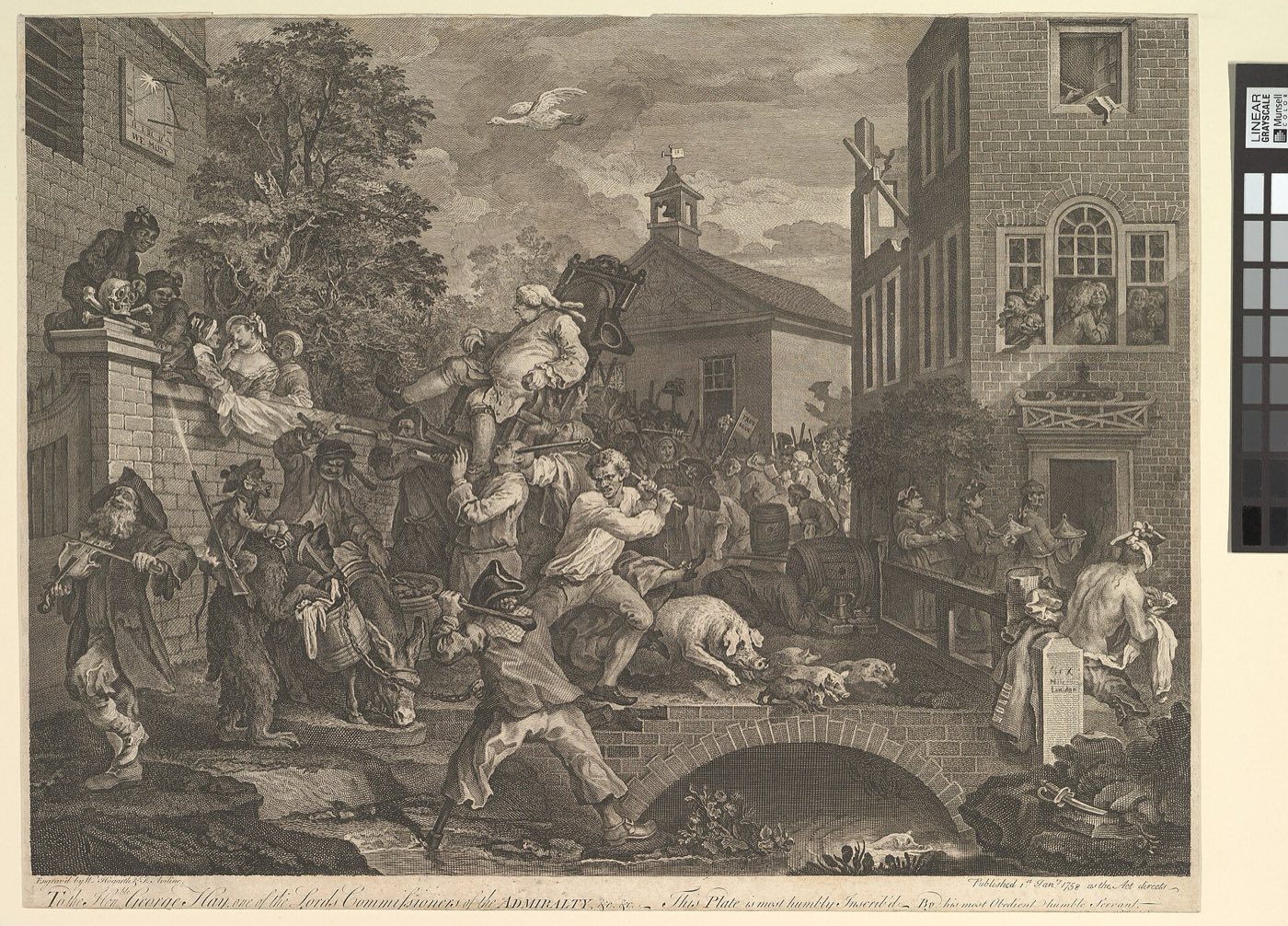
Hogarth painted the series in 1754, after the Oxfordshire election of that year, and published it as four engravings from 1755 to 1758. The engravings reverse the paintings left to right. The images are the Metropolitan Museum of Art’s, released into the public domain; select a picture to open it at full size. Text: William Hogarth, An Election Entertainment, Plate I of Four Prints of an Election (1755), engraving; The Metropolitan Museum of Art (CC0); William Hogarth, Canvassing for Votes, Plate II of Four Prints of an Election (1757), engraving; The Metropolitan Museum of Art (CC0); William Hogarth, The Polling, Plate III of Four Prints of an Election (1758), engraving; The Metropolitan Museum of Art (CC0); William Hogarth, Chairing the Members, Plate IV of Four Prints of an Election (1758), engraving; The Metropolitan Museum of Art (CC0).
William Hogarth (1697–1764) changed English art with his "modern moral subjects": series of paintings that tell a story scene by scene, packed with symbolic details and references to current events. Because he also sold engravings of his paintings, his satires reached a much wider audience than the paintings alone could.
The Humours of an Election is a four-part satire based on the Oxfordshire election of 1754, the most expensive English election of the century. The plates follow an election from start to finish: a candidates' feast, the buying of votes, the polling, and the victory procession. Hogarth mocks both parties, the Whigs and the Tories. Look at each plate slowly, and pick out the small details, such as who is taking money, who is being brought to vote, and what is about to fall.
Hogarth, William. Four Prints of an Election. 1755–1758. British Literature I: Readings, oer.drechols.prof/british-lit/hogarth-humours-of-an-election/. Accessed day Month year.
Cite a passage by paragraph number, for example (par. 12). Each number in the margin links to its paragraph.